
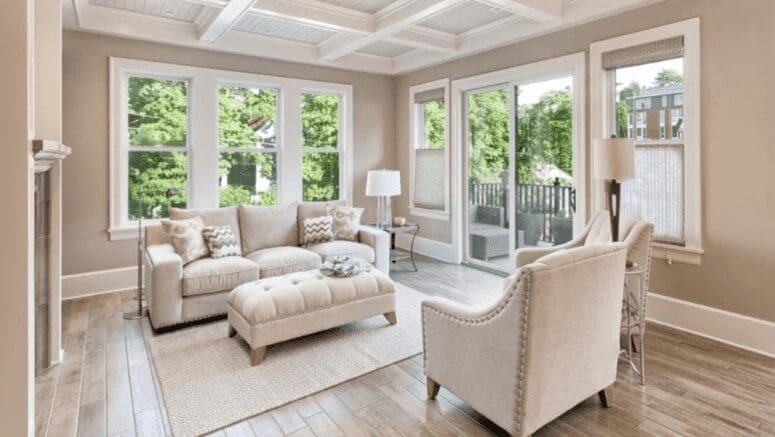
How Much Does Home Staging Cost? 5 Ways to Save Money and Still Turn Your House into a Showcase
- Updated
- Originally published
- 12 min read
-
 Christine Bartsch, Contributing AuthorClose
Christine Bartsch Contributing Author
Christine Bartsch, Contributing AuthorClose
Christine Bartsch Contributing AuthorFormer art and design instructor Christine Bartsch holds an MFA in creative writing from Spalding University. Launching her writing career in 2007, Christine has crafted interior design content for companies including USA Today and Houzz.
-
Sam Dadofalza, Associate EditorClose
Sam Dadofalza Associate Editor
Sam Dadofalza is an associate editor at HomeLight, where she crafts insightful stories to guide homebuyers and sellers through the intricacies of real estate transactions. She has previously contributed to digital marketing firms and online business publications, honing her skills in creating engaging and informative content.
“Why do you think model homes sell so fast?” asks Laura Sanders, a 24-year veteran real estate agent in Coral Springs, Florida. “It’s because they’re staged. Sellers get the money they spend back, and they sell quicker.”
Data backs it up: staged homes tend to sell quicker and for more money than those left empty or unprepared. About 29% of real estate agents said staging boosted offers by 1% to 10%, while 49% said it helped homes sell faster.

Find an Agent Who Can Help You Stage Your Home
An experienced agent will understand the value of staging, provide DIY tips, and refer you to the best staging experts in your market. HomeLight can connect you with a top-performing agent near you.
With all those figures in favor of home staging, hiring a pro sounds like a paying proposition. Home staging costs anywhere from $1,500 to $4,000 for the first month and another $150 to $1,200 per additional month, depending on the size of your home and the amount of staging your home needs.
Before you can determine the level of staging that’s right for you, you’ll first want to understand what professional stagers actually do.


What is home staging?
Home staging is the process of getting a home ready to sell by making it look appealing to as many potential buyers as possible. It usually involves decluttering, rearranging furniture, refreshing the decor, and sometimes making small updates or repairs to give the home a more modern, move-in-ready feel.
Professional home stagers know how to make a property stand out to buyers, using their design know-how and understanding of what buyers want in the local market. They focus on creating a space that photographs well, feels inviting, and shows off the home’s best features.
“I’m a huge advocate of staging,” says Dawn Krause, a top real estate agent in the Wildwood suburb of St. Louis, Missouri. “Sometimes people push back and don’t want to spend that money, but I tell them this is about an investment to net the most amount of money from their home sale. That’s what staging is going to do because the look of the home is so important.”
Thanks to digital media, it’s more important than ever for your home to be well-staged in professional photos and in person.
“A staged home is not exceptional anymore. It’s expected,” says Jenn McCormac with Carousel Staging & Interiors. “We have been conditioned by the marketplace to believe that any home for sale should look like the images we see on social media platforms and popular home improvement shows like ‘Flip or Flop’ and ‘Fixer Upper.’”
Home staging isn’t just about making your house look like a magazine spread. The goal is to make the property feel inviting and appealing to as many potential buyers as possible. That means choosing furniture, decor, and layouts that help buyers picture themselves living there rather than focusing on your personal style.
Staging can also draw attention to desirable features, such as a spacious living room, large windows highlighting stunning views, or a remodeled kitchen, while taking some focus away from less appealing areas. In other words, you want buyers to walk in and immediately see the home’s potential.
“I had a property that backed onto a turnpike,” recalls Sanders. “It was listed unstaged with another Realtor for months, and it was horrible-looking, with horrible pictures. I used staging to take away from that negativity and put it back on the market with new pictures. We had an offer within three days.”
A staged home makes a stronger first impression, whether buyers see it in person or come across it online. It can help your home stand out from similar listings and encourage more competitive offers. When buyers can easily imagine themselves living there, you may have a better chance of selling sooner and getting a better price.
So, exactly how much does it cost to make your home look like it’s been designed by a home improvement show host?

How much does it cost to stage a house?
Some home staging quotes are as little as a few hundred dollars, but others can run into the thousands. To break down the costs, we need to look at the two main types of home staging projects: vacant homes and owner-occupied homes.
Vacant homes are generally more expensive because your stager is bringing in all of their furniture and decor. That’s where those monthly rental fees come in. You’re paying to rent that stager-owned decor by the room and by the month.
Staging costs increase based on how many rooms you stage and how long you need the furniture in place (i.e., until your home sells or you accept an offer). Other costs may include consultation fees and moving expenses for the decor.
The size and type of property can also affect the cost, as larger and more luxurious homes typically require more extensive staging.
“There’s staging, and then there’s luxury staging,” says Nicole Gittens, home stager, interior designer, and author of Purpose by Design. “Staging costs start around $1,500 for smaller homes with less square footage, and it goes up to $10,000 for luxury homes with significantly larger floor plans.”
Owner-occupied homes are a different story. If the stager can use your existing furniture and decor to get the job done, you cut out the rental and transportation costs, which is a major money-saver.
So, lived-in homes can be significantly less expensive, but not always. Lived-in homes are, well, lived-in. Since the stager has to style around all of your stuff, this can amount to hours or days of extra labor.
“Homeowners who are worried about affording staging need to find a stager that can help them achieve the staging goals they have within the parameters of their budget,” explains Gittens. “It’s my job to meet them in the middle with options that are affordable, so they can still reap the benefits of staging.”
Staging budget basics: A common rule of thumb is to budget around 1% to 3% of your home’s listing price for staging. So, if you list your home for $400,000, you might expect to spend roughly $4,000 to $12,000 on staging, depending on the property and scope of the work.
Home staging cost breakdown, according to service level
As mentioned, home staging costs vary based on size, location, and furniture rental inclusions. But generally, you can expect the following one-time or monthly fees, depending on the professional stager’s level of involvement in the project:
| Staging Service | Cost | Service Inclusions |
| Consultation | $150 – $600 per session |
|
| Individual room staging | $300 – $700 per room |
|
| Rearranging and staging with your furniture | $1,000 – $3,000 |
|
| Whole-home staging | $1,500 – $4,000 |
|
| Staging a vacant home with furniture rental | $3,000 – $6,000+ |
|
If traditional staging feels too expensive or too much work, virtual home staging is a budget-friendly alternative. Instead of bringing in real furniture, a designer digitally adds furniture, decor, and other touches to photos of your home. For key rooms, virtual staging typically costs around $72 to $360, making it much cheaper than traditional staging.
With this, you can make listing photos more appealing, show off a room’s potential, and help buyers picture themselves living there. Just remember that the changes only appear in the photos, so it’s a good idea to add a disclaimer noting that the images have been virtually staged and that the furniture or decor shown may not be in the actual home.
How to reduce home staging costs
So, how can you keep those home staging costs from creeping up too high? Let’s take a look at the top five options:
1. Wrap staging expenses into your closing costs
Let’s say your home stager has come up with a spectacular yet affordable staging plan that’ll show off your home in its best light in a tough market, but it’s still going to cost you a couple of grand.
How do you swing that when you’re already struggling to pay moving expenses? Ask your stager if you can pay them out of the proceeds of your home sale.
“Many companies, like Carousel, will work with clients to make the staging affordable by letting them pay for the majority of the staging costs at closing, once the property has sold,” says McCormac.
Not all stagers will agree to delay payment in full until after the home sells because of those few bad eggs who run off without paying, but it doesn’t hurt to ask.

2. Stage only key rooms in vacant homes
Vacant homes are harder to sell because it’s difficult for buyers to feel connected to a house with nothing in it. About 83% of buyer’s agents reported that it’s easier for buyers to visualize how their own sofa and end tables will fit into the living room if they see similar furniture in place.
But completely staging every empty room in a three- or four-bedroom house isn’t affordable for most home sellers. If you need to save money, don’t bother staging every inch. Just stage the rooms that your potential buyers will use the most. The rooms most commonly staged were the living room (91%), followed by the primary bedroom (83%) and the dining room (69%).
“For vacant home sellers on a budget, we would just stage the common areas plus the primary bedroom,” says Vanessa Nielsen, a professional stager with Encore Staging Services.
“Depending on square footage, vacant home staging can range anywhere from $2,350 to $3,350 as a base price for the standard areas: living room, dining room, kitchen, all bathrooms, and the primary bedroom. All other areas are at an additional fee.”


3. Stage the home yourself after a professional consultation
Whether you’re strapped for cash or simply a fan of interior decorating, one guaranteed way to save money on staging is to DIY the staging, with some professional guidance.
“You don’t have to spend all this money on staging,” explains Sebastian Frey, a top real estate agent in the greater San Jose, California area. “Most people that I work with just need some guidance on what they should do from a staging consultation. Then, they carry that out with their own sweat equity. Doing it that way is not going to cost very much, and it’s not going to take very long,” he adds.
Of course, this only works if your existing furniture and decor are already magazine-worthy. Your stager can tell you what works and what doesn’t during the typically two-hour consultation.
Pre-staging tasks: Make the most of that consultation time by doing a lot of the grunt work before the stager arrives. Start by decluttering and depersonalizing, packing away everything (except your best decor items) that isn’t a necessity, and then give your home a top-to-bottom deep clean.
Do your best to DIY stage what’s left, keeping an additional assortment of artwork and decor set aside for your professional stager to pull from. With less clutter to wade through, your pro will have plenty of time to advise you on the finishing touches. They may even make some of the changes for you, and a few won’t even charge you for it.
“There are definitely some homes out there that have amazing furnishings, but they just need a fresh eye and a second opinion,” says Nielsen. “For these homes, I’m happy to do a thorough consultation as I do at every home, and I end up not charging the homeowners for my time.”
However, in Nielsen’s experience, “only about 5% of sellers have any design sense or have furniture that’s up to par,” she adds. “But whenever I visit a home that’s already got great pieces, I happily tell them they don’t need to spend their money hiring me or anyone. I feel we have this fiduciary duty, just like real estate agents and loan officers, to do what’s in their best interest.”
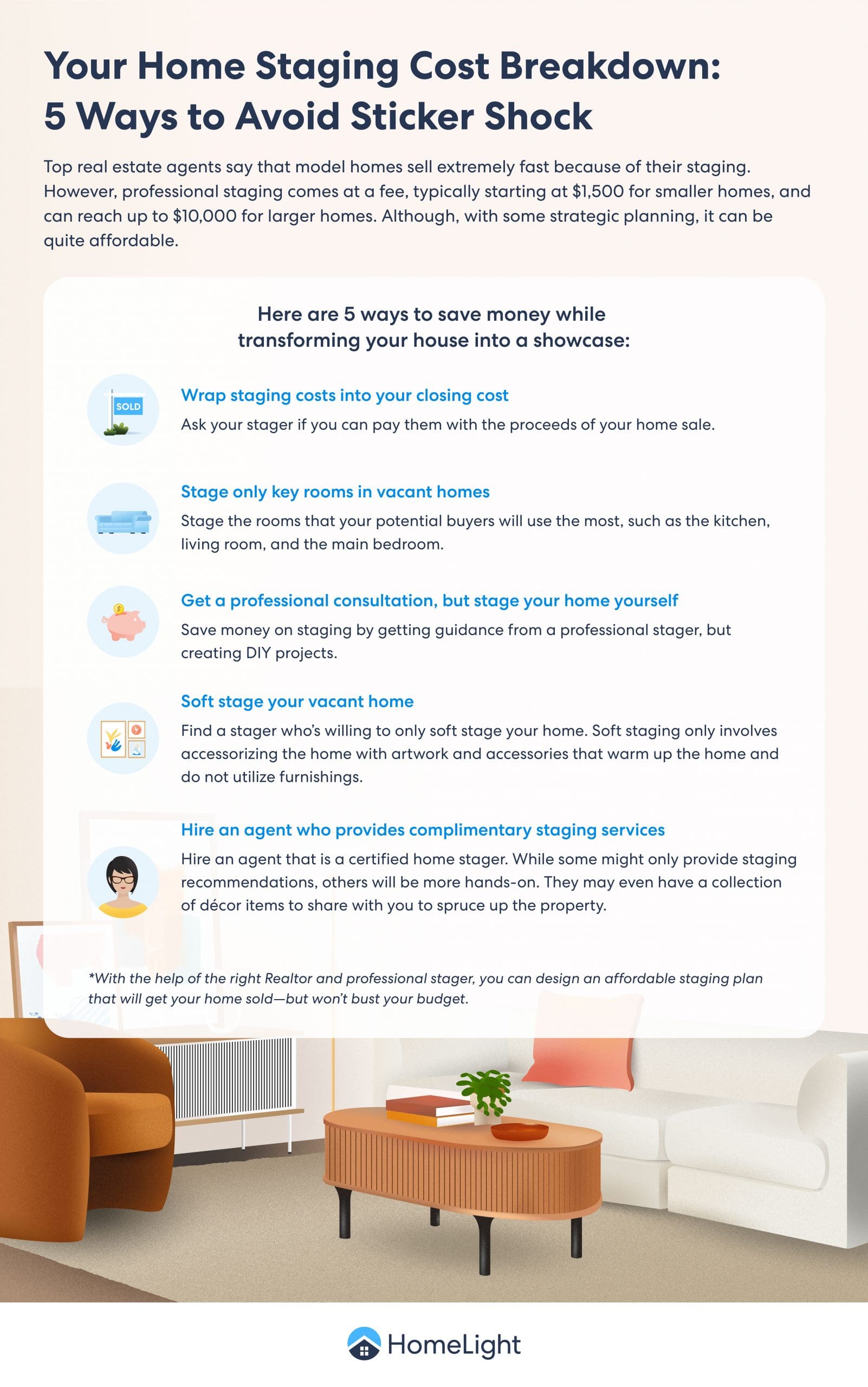
4. Soft stage your vacant home
If even partially staging your vacant home isn’t an option financially, it may be worthwhile to invest a little money in soft staging.
“Soft staging only involves accessorizing the home with artwork and accessories that warm up the home and does not utilize furnishings,” explains Gittens. “It’s a last resort for a seller who cannot afford traditional staging and doesn’t want the empty home to feel too cold upon entry.”
Along with artwork on the walls, soft staging includes things like colorful towels in the bathrooms or a bowl of fruit on the kitchen counter. These attractive additions draw the buyer’s eye so that they focus on the pleasant features of your home rather than searching for any flaws.
The trick is finding a stager who’s willing to only soft-stage your home.
“I do not offer soft staging services,” explains Gittens. “There’s a lot of time and work that goes into our staging jobs, and at the end of the day, it has to be worth everyone’s time. I think if a seller is willing to consider soft staging, the stager should present some other options that do involve lighter furnishings that will still get the job done.”
That step up from soft staging doesn’t have to be expensive. For example, it’s often cheaper to rent a pair of occasional chairs and a single end table than a full living room set.
“A lot of times, living spaces can still be shown in their best light with more intimate conversational seating areas,” says Gittens. “The best way to cut costs when staging is to find a stager who is willing to work with you.”


5. Hire an agent who provides complimentary staging services
“If you can’t afford it, hire a Realtor who is a certified home stager because they can help you,” suggests Sanders. “Like for me, I am a certified home stager, and I don’t charge extra for that service.”
Of course, not all agents are also certified stagers. Some agents simply pay for staging out of their own pocket because they truly believe in the value it provides for their clients.
“I give my clients a staging consultation for free,” says Frey. “I walk through the property with my stager that I pay for, and I record our conversation. Then I transpose it later, and I write down a list of things to do, room by room. So my clients can literally stage their house for free if they put in the work.”

Stage Smart, Price Right
A beautifully staged home can make a strong impression, but the right price is what turns interest into offers. Use HomeLight’s Home Value Estimator to understand your home’s potential value and make a confident pricing decision.
To stage or not to stage
The verdict is in: Almost any agent will tell you that home staging saves days on market and makes their clients more money.
It makes your property look more inviting, stand out in listing photos, and helps buyers picture themselves living there. You don’t have to go all out. Staging just the key rooms or using virtual staging can help keep costs manageable.
Before deciding how much to spend, weigh the potential benefits against your budget and the price you’re hoping to get for your home. With a strategic approach and the help of the right real estate agent and professional stager, you can come up with an affordable staging plan that will get your home sold without busting your budget.
Home staging FAQs
The cost of home staging varies widely based on factors such as location, size of the home, whether furniture rental is required, and the extent of services provided. While some basic consultations may cost a few hundred dollars, full-service staging for larger homes can run into the thousands.
Yes, staging can make a difference in both how quickly a home sells and how much buyers are willing to offer. The National Association of Realtors (NAR) reports that 29% of real estate agents saw offers increase by 1% to 10% after staging, while 49% said staged homes spent less time on the market. While staging doesn’t guarantee a higher sale price or faster sale, these numbers suggest it can give your home an edge when competing for buyers.
There’s no set amount that staging will add to your home’s value, since it depends on the property and local market. However, as NAR data shows, some sellers’ agents report a 1% to 10% increase in the dollar value offered after staging. Just keep in mind that while staging can help, it doesn’t necessarily mean you’ll get a higher sale price.
Most staging contracts run 30 to 90 days to give your home time to sell. If it doesn’t, you can usually renew month to month, but extra fees might pop up. Some companies also charge for removing or restocking furniture, and the longer your home sits, the more it can cost. It’s a good idea to check the contract so you know what to expect if your home takes a while to sell.
Yes, you can factor staging costs into your overall selling expenses when figuring out how much you’ll net from the sale. You generally can’t add the cost directly to your home’s asking price, but you can consider it when deciding how much you need to spend to prepare the property. Your agent can also help you weigh the staging investment against the potential payoff.
Home staging is about making a property appealing to potential buyers so it can sell, while interior design is focused on creating a space that works for the people who live there. Staging usually uses more neutral choices and emphasizes features that will appeal to a broad range of buyers. Interior design, on the other hand, is more personal and can reflect the homeowner’s specific tastes and lifestyle.
Header Image Source: (Breadmaker/ Shutterstock)
At HomeLight, our vision is a world where every real estate transaction is simple, certain, and satisfying. Therefore, we promote strict editorial integrity in each of our posts.